
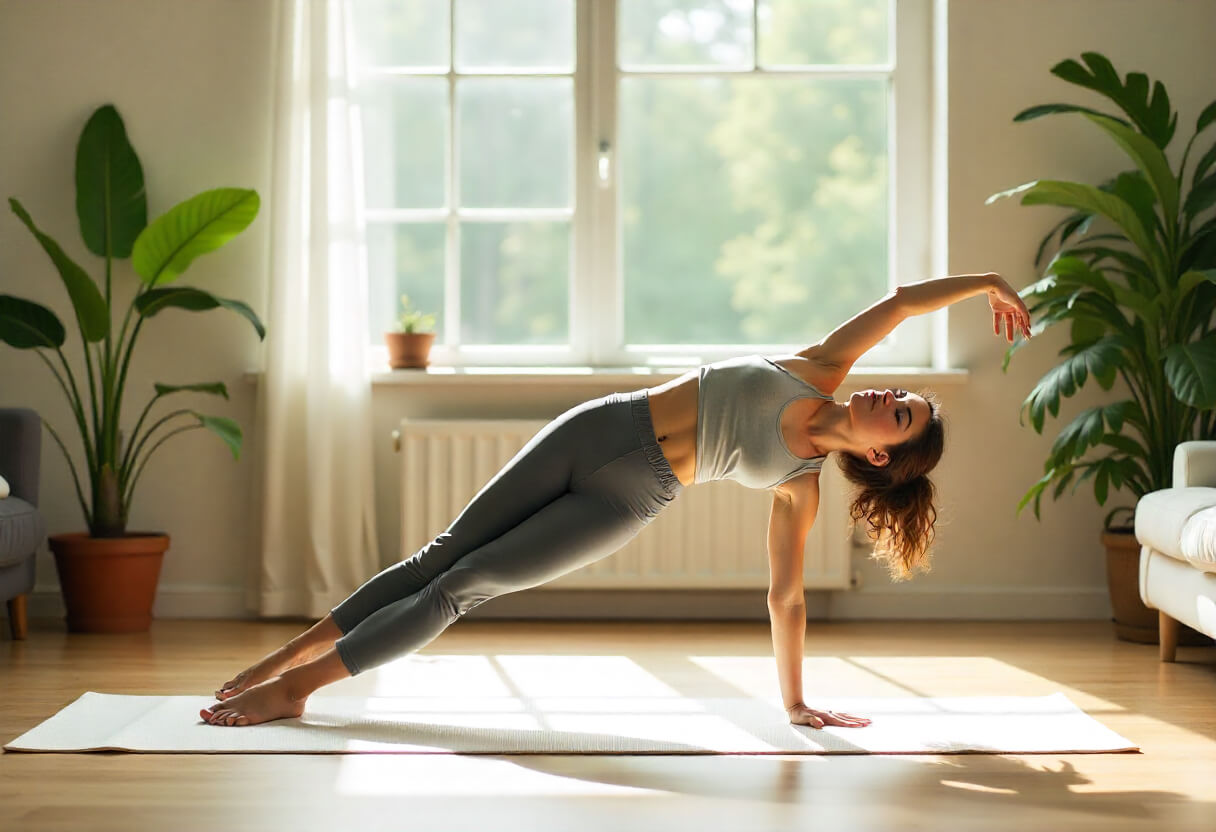
A strong core is essential for overall fitness, posture, balance, and injury prevention. Core workouts target abdominal muscles, obliques, lower back, and stabilizing muscles, improving strength and functional movement. The best part? You can perform highly effective core exercises at home without expensive equipment.
Planks are a fundamental exercise for core strength. By holding a plank position, your abdominal muscles, lower back, and shoulders engage simultaneously. Variations like side planks or forearm planks add intensity and target different core areas.
Crunches and bicycle crunches isolate the abdominal muscles, improving strength and endurance. These movements help define abs while engaging the obliques, promoting a balanced core.
Leg raises are effective for targeting the lower abs. Lying flat on your back and lifting your legs slowly engages deep core muscles while improving hip flexor strength.
Russian twists strengthen the obliques and improve rotational stability. Holding a weight or household object while twisting side to side adds resistance and enhances core development.
Mountain climbers combine cardio with core activation. This dynamic movement raises heart rate, burns calories, and engages multiple muscle groups simultaneously, supporting both strength and fat loss.
Consistency is key. Performing a 15–20 minute core workout 3–4 times per week can improve posture, balance, and overall functional strength. Pairing core exercises with full-body workouts maximizes results and creates a well-rounded fitness routine.
Proper form is critical to avoid injury. Engaging the core, maintaining neutral spine alignment, and avoiding excessive strain on the neck or lower back ensures safety and effectiveness. Beginners should start with shorter intervals and gradually increase duration as strength improves.
Recovery and stretching are also important. Post-workout stretches targeting the lower back, hip flexors, and abs reduce muscle soreness and enhance flexibility. Adequate hydration, balanced nutrition, and rest support muscle recovery and growth.
Core workouts are not only about aesthetics—they improve stability, balance, and performance in everyday activities. Strong core muscles support better posture, reduce back pain, and enhance athletic performance in other fitness routines.
In conclusion, core workouts at home are an effective, convenient way to strengthen abdominal muscles, improve posture, and enhance overall functional fitness. Exercises like planks, crunches, leg raises, Russian twists, and mountain climbers provide a balanced approach to core development. Consistency, proper form, and recovery are key to achieving a strong, healthy core.