
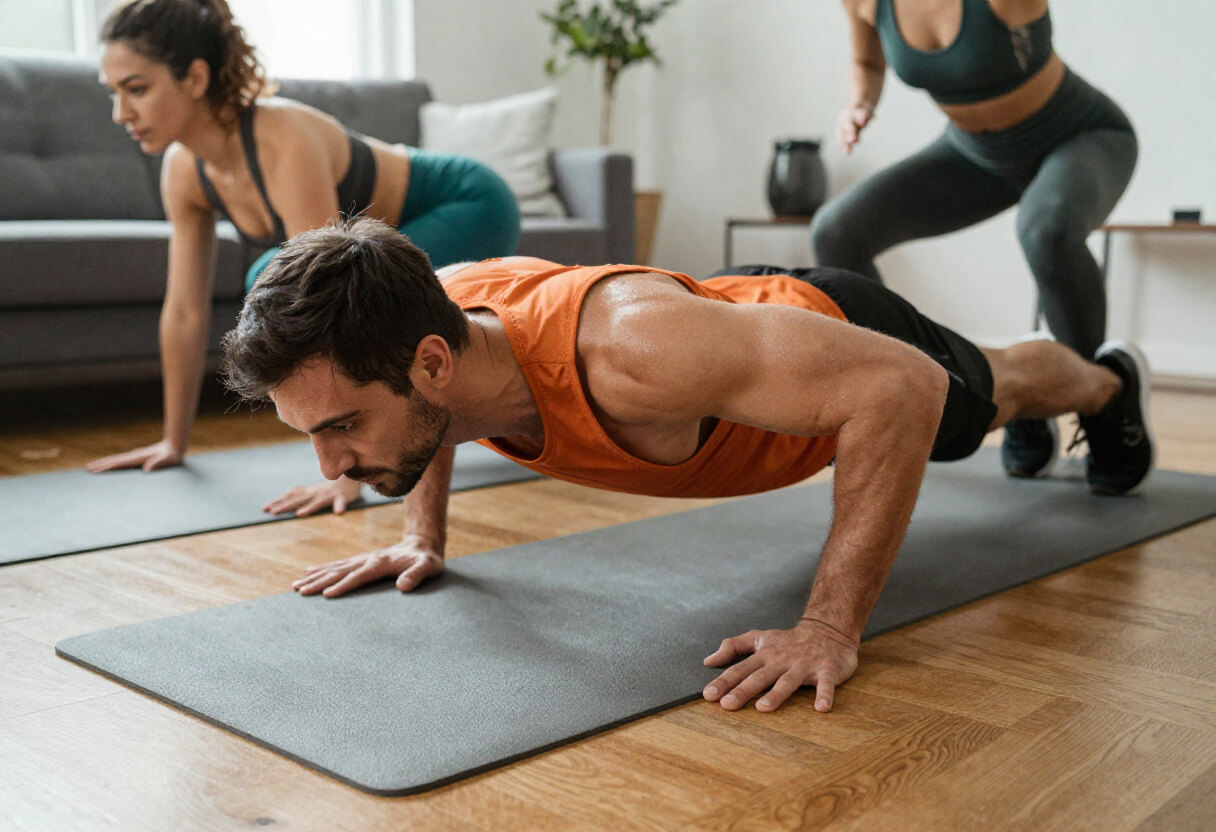
Staying fit doesn’t always require an expensive gym membership or fancy equipment. A full body workout at home can be just as effective for building strength, burning fat, and improving overall fitness when done correctly. Whether you are a beginner or someone returning to fitness, home workouts offer flexibility, comfort, and consistency—three key factors for long-term success.
A full body workout targets all major muscle groups, including your chest, back, legs, arms, shoulders, and core. This approach helps improve muscle balance, boosts metabolism, and burns more calories compared to workouts that focus on just one area. It is especially beneficial for busy individuals who want maximum results in minimum time.
One of the biggest advantages of home workouts is accessibility. You don’t need machines or weights to challenge your body. Exercises such as squats, push-ups, lunges, planks, and jumping jacks use your own body weight as resistance. These movements improve strength while also increasing cardiovascular endurance.
A simple full body workout can start with a warm-up to prepare your muscles and joints. Five to ten minutes of light activity like marching in place, arm circles, and dynamic stretches help reduce the risk of injury. Warming up also improves blood flow and enhances workout performance.
The main workout can include a mix of strength and cardio exercises. Squats and lunges strengthen your legs and glutes, push-ups build upper body strength, and planks engage your core muscles. Adding movements like mountain climbers or high knees increases your heart rate, helping you burn fat more efficiently.
Rest and recovery are just as important as exercise itself. Between sets, short rest periods of 30 to 60 seconds keep your heart rate elevated while still allowing muscle recovery. After completing your workout, cool down with gentle stretching to reduce muscle stiffness and improve flexibility.
Consistency plays a crucial role in seeing results. Performing a full body workout at home three to five times per week can significantly improve strength and endurance over time. Pairing workouts with proper nutrition, hydration, and quality sleep further enhances your progress.
Home workouts also support mental well-being. Regular physical activity reduces stress, improves mood, and boosts confidence. Exercising in your own space can make fitness feel less intimidating, helping you stay motivated and committed to your goals.
For beginners, it’s important to start slow and focus on proper form rather than speed or intensity. As your fitness level improves, you can increase repetitions, add variations, or shorten rest times to keep challenging your body.
In conclusion, a full body workout at home is an effective, practical, and sustainable way to stay fit. With minimal space and no equipment, you can build strength, burn calories, and improve overall health. The key is consistency, correct technique, and a positive mindset. Fitness is not about perfection—it’s about progress, one workout at a time.